
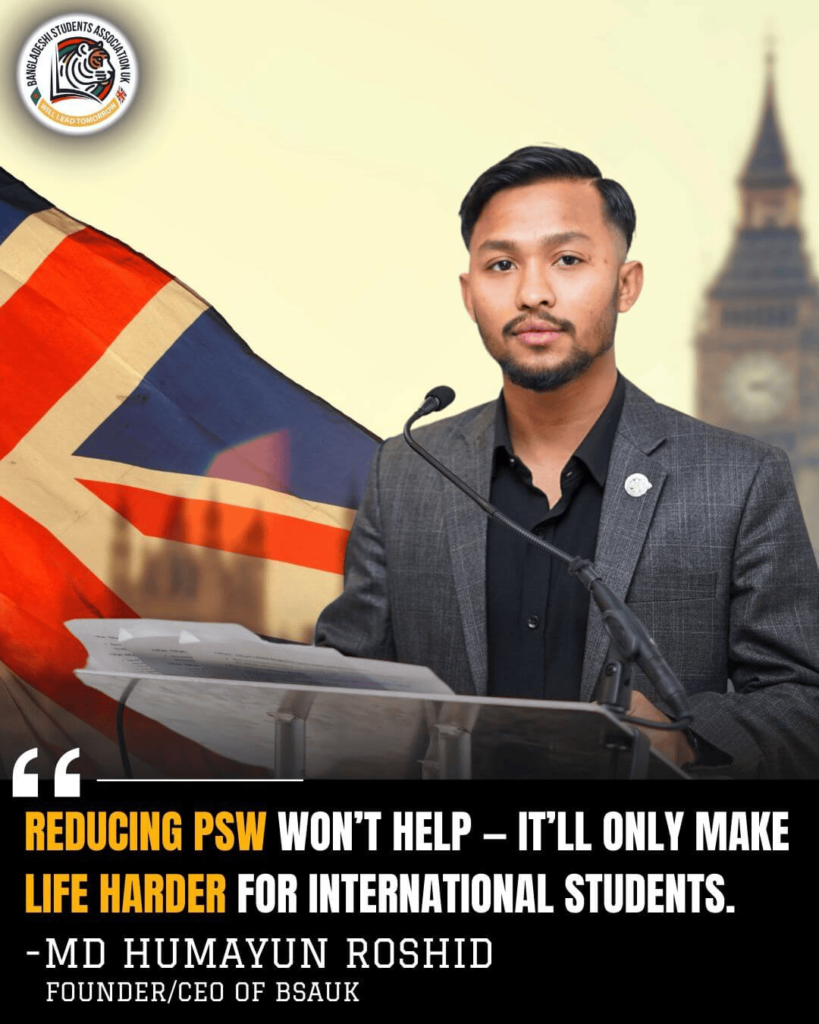
The recently proposed UK Immigration White Paper 2025 has triggered deep concern among international student communities, especially among Bangladeshi students who form a significant portion of the UK’s international academic population. While it’s important to stress that the White Paper is currently a proposal — not a final law, the potential changes being suggested could deeply reshape the experiences and opportunities available to students coming from abroad.
Let us first be clear: the White Paper will undergo parliamentary scrutiny, including debates, amendments, and legal review, particularly with respect to UK human rights laws and international obligations. Until then, no student should panic — this is a time to stay informed and united, not fearful.
However, it is vital to examine what impact the proposed changes could have — especially if the Post-Study Work (PSW) period is shortened, entry requirements are made more stringent, and tuition fees increase.
- Post-Study Work (PSW) Period: A Vital Window
The PSW visa offers graduates a critical opportunity to gain real-world work experience, build their careers, and ease the financial pressures of studying abroad. For many Bangladeshi students, this period is also a time to recover part of their investment, gain UK work experience, and prepare for higher education or skilled job roles.
If the PSW window is shortened, students will have less time to find meaningful employment, often being forced into low-skilled jobs or premature return. Moreover, for those planning to pursue a postgraduate degree, the PSW phase allows them to earn and save, rather than depend fully on family support back home. Reducing this timeframe may lead to increased financial stress, diminished learning opportunities, and even discourage genuine talent from choosing the UK as a study destination.
- Stricter Entry Requirements: A Double-Edged Sword
The suggestion to increase academic and language requirements for international students has both merits and challenges. On one hand, higher standards can ensure only genuine and prepared students are admitted — which is essential to protect the integrity of the UK’s education system. In recent years, abuse of the student visa system, such as the use of fake documents or applying solely to exploit immigration loopholes, has brought reputational damage — not just to individuals but to entire communities and institutions.
In some cases, Bangladeshi universities and colleges have been blacklisted, and students face visa bans due to the actions of a few irresponsible agents and applicants. If tougher entry rules help restore credibility and quality, they could be beneficial in the long run.
But at the same time, we must acknowledge that many genuine and talented students from Bangladesh come from underprivileged backgrounds. Raising the bar too high without support mechanisms — such as English preparation or foundation courses — may unintentionally block access to education for deserving candidates.
- Tuition Fee Increases: A Burden on Aspirations
Another concern is the potential rise in tuition fees. The UK is already one of the most expensive destinations for international students. Further increases, without financial aid or scholarship reform, will price out students from middle-income families — especially those in Bangladesh, where currency exchange rates already pose challenges.
A Balanced Approach Is Needed
It is essential to separate genuine students from immigration opportunists. We, as a community, fully support efforts to maintain the UK’s world-class education standards. However, blanket restrictions or financial hurdles must not push away promising young minds who seek knowledge, global exposure, and the chance to contribute meaningfully to society.
Finally, student recruitment agents and education consultancies — especially those in Bangladesh — must also face scrutiny. Dodgy agents who exploit students under false pretenses must be rooted out to restore trust and safeguard the future of ethical student mobility.
Conclusion
Let us not panic over headlines. The White Paper is not law — not yet. What we can do is stay alert, speak up, and protect the values of fairness, integrity, and opportunity that the UK education system has long promised.
We urge the UK government to engage with student communities, university representatives, and human rights advocates before implementing final decisions — because policy must not only serve border control, but also uphold education, equity, and global cooperation.